Part 4 · Culture & Identity
County Governance
From territorial formation in 1880 through the Dingell Act of 2019: the Board of County Commissioners, elected offices, federal land management conflicts, the fiscal impact of coal decline, and the political culture of one of Utah's most reliably conservative rural counties.
Ch23 — County Governance
Emery County, Utah, came into being on February 12, 1880, when the Utah Territorial Legislature carved a new governmental unit from the heart of Sevier and Sanpete counties. In the 145 years since, its governing institutions have been tested by boom and bust, shaped by the peculiar tensions of a rural county whose land is overwhelmingly owned by the federal government, and guided by a citizenry whose political culture is as rugged and self-reliant as the canyon country it inhabits. County governance in Emery County is the story of a small community trying to exercise local authority over a vast landscape — one that has never quite been fully its own.

23.1 Formation and Naming
The legislature’s decision to create Emery County in February 1880 reflected the rapid pace of Mormon colonization in east-central Utah during the preceding decade (see Ch16: Mormon Colonization ↗ 3 Ch16: Mormon Colonization LDS settlement of Emery County: the call to colonize Castle Valley, founding of pioneer towns, cooperative irrigation, a... Read chapter → ). Settlements had taken root along Castle Valley’s creeks and the Price River drainage; residents needed courts, roads, and county infrastructure that the distant seats of Sevier and Sanpete counties could not efficiently provide.
The proposed name for the new county was Castle County — a logical choice given the dramatic castle-shaped buttes and mesas that define the landscape. But as the enabling legislation was debated, sentiment shifted toward honoring a departing official: Governor George W. Emery, whose term as Utah Territory governor was drawing to a close at precisely the moment the bill was under consideration. The honor was bestowed, and the county took his name.
Emery County was very nearly named Castle County, after the castle-shaped buttes and mesas of Castle Valley. While the bill was being debated in 1880, the honor shifted to George W. Emery, whose term as governor of Utah Territory was ending at that very moment.
— UEN Utah History Encyclopedia, “Emery County”; Utah Division of Archives and Records Service, Emery County agency history
The first county seat was designated at Castle Dale, a settlement along Cottonwood Creek in Castle Valley that had been established in the late 1870s. Castle Dale has retained the county seat designation continuously — a point of some civic pride, given subsequent challenges.
The 1880 federal census documented 556 people and 84 farms in the newly formed county, though historians believe the actual population was likely higher, with the census undercounting recently arrived settlers still establishing homesteads. By 1890, the population had grown to 2,866 — driven by irrigation development, the steady influx of Latter-day Saint families from Utah Valley and Sanpete County, and the first stirrings of coal extraction in the northern reaches of the county.
The County Seat
- Your subject
- A county government building in Castle Dale, which has been Emery County’s seat since the county was created in 1880.
- Where to find it
- Castle Dale, photographed from a public sidewalk or street. Do not photograph people at work inside public offices without asking.
- What to look for
- Look for signs, flags, dates on the building and anything that tells a visitor this is where county government happens.
- The story you're telling
- Section 23.1 notes that Castle Dale has kept the county seat continuously, even after Price tried to take it in the early 1890s (§23.2). Your picture shows the place that won that contest.
- Composition tip
- Stand across the street to fit the whole building in, and include a little of Main Street so viewers can see how the seat sits in a small town.
Share your photo with #EmeryEncyclopedia
23.2 Boundary Changes: Grand County and Carbon County
Emery County as constituted in 1880 encompassed far more territory than it does today. Its northern tier — the Price River watershed, the Book Cliffs coalfields, and the settlements clustered around Price — would eventually generate its own political constituency.
In 1890, the Utah legislature split off Grand County from Emery County’s eastern portion, giving the communities along the Grand River (modern Colorado River) near present-day Moab their own governmental identity. This reduced Emery County’s eastern boundary to roughly its current configuration.
The more consequential separation came four years later. As Price grew into a genuine regional hub — boosted by coal mining and the arrival of the Denver and Rio Grande Western Railroad in 1883 — its residents began lobbying to move the county seat from Castle Dale to Price. The legislature declined. Frustrated, Price River communities pursued an alternative: they petitioned for the creation of an entirely new county. On March 8, 1894, the Utah Territory legislature established Carbon County, taking its name from the coal deposits that defined its character (see Ch17: Coal, Copper & Uranium ↗ 3 Ch17: Coal, Copper & Uranium The extractive century: coal seams of the Wasatch Plateau, uranium-rich sandstones of the San Rafael Swell, copper bypro... Read chapter → ), and setting its southern boundary along a line that roughly corresponds to today’s Emery-Carbon county line.
Carbon County exists because Price lost an argument. When Price residents asked the legislature to move the county seat from Castle Dale to Price, the legislature said no. The Price River communities then asked for a county of their own, and on March 8, 1894, Carbon County was created from Emery County’s northern tier.
— UEN Utah History Encyclopedia, “Carbon County”; §23.2
The Shrinking County
Find a map of Utah’s counties and trace the outline of Emery County as it is today. Then add Grand County, which was split from Emery’s eastern side in 1890, and Carbon County, which took the northern tier around Price in 1894. Color those two counties lightly in the same color as Emery: together they show roughly how big Emery County was in 1880. Talk about which parts the county kept (the San Rafael Swell, Castle Valley and the Green River corridor) and which it lost (the coalfields around Price), and why people in Price wanted a county of their own.
What you'll need:
A map of Utah counties, printed or online, Colored pencils
The loss of the carbon-rich northern tier was significant. Emery County retained the San Rafael Swell, Castle Valley, and the Green River corridor — superb landscapes, but far less economically productive in the near term than the coalfields that had been ceded. The political rivalry between Castle Dale and Price, between the agricultural valley and the industrial coal town, echoed through subsequent decades in debates over roads, water projects, and legislative representation.
After 1894, Emery County’s boundaries have remained essentially stable — covering approximately 4,462 square miles, making it one of the larger counties in Utah by area, even as its population remained among the smallest.
23.3 The Commission Form of Government
Emery County operates under the commission form of county government — the standard model prescribed by Utah law for counties that have not adopted the optional council-manager or executive-council alternatives. A three-member Board of County Commissioners serves simultaneously as the county’s legislative body, its chief executive, and its primary administrative authority.
Commissioners are elected at large in partisan elections to four-year terms, with elections staggered so that at least one seat comes up in each two-year election cycle. This structure means that the county never has a complete turnover of the commission in any single election, providing a degree of institutional continuity rare in small rural governments.
The commission holds broad powers: adopting the county budget, setting property tax levies, issuing bonds, enacting county ordinances, managing unincorporated land use and zoning, and supervising most county departments. Commissioners also serve ex officio on various boards and districts — from the county health board to special service districts for water, fire, and recreation. Commission meetings are held on the first and third Tuesday of each month at 3:00 PM in the county seat, and meetings are open to the public as required by Utah’s Open Meetings Act.
The relatively small size of Emery County’s population — hovering between 10,000 and 11,000 residents for much of recent decades — means that county commissioners often have direct personal relationships with their constituents. It is not unusual for a commissioner to know by name the rancher requesting a road improvement, the business owner appealing a zoning decision, or the family asking for assistance with a county services application. This intimacy is both a strength and a source of complexity; governance in a small community is rarely anonymous.
Among recent commissioners, Lynn Sitterud has served as Commission Chair and has been notably active in federal public lands negotiations. Jordan Leonard and a third commissioner (referred to in recent meeting minutes as Commissioner Jensen) round out the current board. [needs additional sources: full historical list of commissioners by term]
23.4 Elected County Offices
Beyond the commission itself, Emery County voters elect several county-wide officers who manage specific governmental functions independent of direct commission oversight. This separation of powers at the county level — an inheritance of the Jacksonian democratic tradition of popular election of administrative officers — distributes governmental authority across multiple independently accountable officials.
Table 23-A — Emery County Elected Offices
| Office | Function | Term |
|---|---|---|
| Board of County Commissioners (3) | Legislative + executive + administrative; budget, levies, ordinances, land use | 4 yr, staggered |
| County Assessor | Values all real/personal property incl. industrial facilities & mineral rights | 4 yr |
| County Clerk/Auditor | Elections, official records, budget process | 4 yr |
| County Recorder | Deeds, liens, ownership records | 4 yr |
| County Treasurer | Tax collection, county funds, tax-roll administration | 4 yr |
| County Sheriff | Law enforcement over unincorporated county; SAR; civil process | 4 yr |
| County Attorney | Criminal prosecution; three court venues | 4 yr |
Holders intentionally omitted — rosters change with election cycles; §23.3 flags the live commission roster as needing verification. Source: Emery County Department Directory (emery.utah.gov); Utah county-government statute.
County Assessor. The Assessor is responsible for valuing all real and personal property within the county for ad valorem tax purposes. Across 4,462 square miles of rugged terrain, this work involves assessing not only residential and commercial property but agricultural land, ranch improvements, mineral rights, and the substantial industrial facilities — power plants, mine installations, processing facilities — that have historically generated a large portion of Emery County’s property tax base. As coal operations have contracted, the assessed value of industrial property has fallen significantly, placing downward pressure on county revenues.
County Clerk/Auditor. The Clerk/Auditor occupies one of the most administratively complex positions in county government. The office administers elections in coordination with the Utah Lieutenant Governor’s Office, maintains the official records of county government proceedings, and manages the budget process — drafting the preliminary budget, coordinating with departments, and preparing the adopted budget document. Budget documents for fiscal years 2020 through 2025 are publicly available through the Clerk/Auditor’s website. [needs additional sources: coal-era budget figures, revenue breakdown by source]
County Recorder. The Recorder maintains property ownership records, deeds, liens, and encumbrances — the documentary foundation of real property law within the county. In a county where land ownership is both complex (federal, state, private, tribal trust, railroad grant lands) and historically contested, the Recorder’s archive represents an essential institutional memory.
County Treasurer. The Treasurer collects property taxes, manages county funds, and coordinates tax roll administration. The relationship between the Treasurer and the county’s major industrial taxpayers — historically coal companies, electric utilities, and uranium processors — has at times been contentious, with disputes over assessed valuations and contested tax payments following boom-and-bust cycles.
23.5 The Justice System: Sheriff, Attorney, and Courts
The Emery County Sheriff’s Office is the primary law enforcement agency for the unincorporated portions of the county, which constitute the vast majority of Emery County’s territory. The Sheriff’s Office provides patrol services across an enormous geographic area — from the Green River corridor in the east to the canyon country of the San Rafael Swell in the west, from the Book Cliffs border in the north to the San Rafael Desert in the south. Specialized services include criminal investigations, civil process serving, community engagement, animal control, and search and rescue operations.
The Search and Rescue (SAR) function is particularly demanding in Emery County. The county’s recreational landscape — slot canyons, remote mesas, technical climbing routes, desert backcountry, and the San Rafael River gorge — draws visitors who sometimes overestimate their preparedness. The Sheriff’s SAR team comprises trained volunteers and deputies capable of operating in extreme terrain and weather, from winter snowstorms on the Book Cliffs to summer heat emergencies in the San Rafael Swell.
The Sheriff’s Office is headquartered at 1850 North Des Bee Dove Road, Castle Dale, UT 84513. Following a BLM land conveyance under the Dingell Act framework, the county was also able to establish a Sheriff’s Office substation — improving response times in portions of the county distant from Castle Dale.
The Emery County Attorney prosecutes criminal matters arising within the county. Cases are heard in three judicial venues depending on their severity: the Emery County Justice Court, which handles infractions and class B and C misdemeanors; the Seventh Judicial District Court, which has jurisdiction over serious felonies, civil matters, and major criminal trials; and the Juvenile Court. The Seventh Judicial District encompasses Emery, Carbon, Grand, and San Juan counties, so district court judges circuit between multiple county seats.
The Justice Court is located at 1850 N 560 W, Castle Dale, UT 84513 — a physical proximity to the Sheriff’s Office that reflects the practical logic of small-county governance, where institutions must share limited facilities and staff.
23.6 Infrastructure and Public Services
The daily work of Emery County government is largely unglamorous: maintaining roads across 4,462 square miles of desert terrain, running the county’s solid waste program, managing county-owned facilities, and delivering the public services — health, recreation, planning — that residents expect.
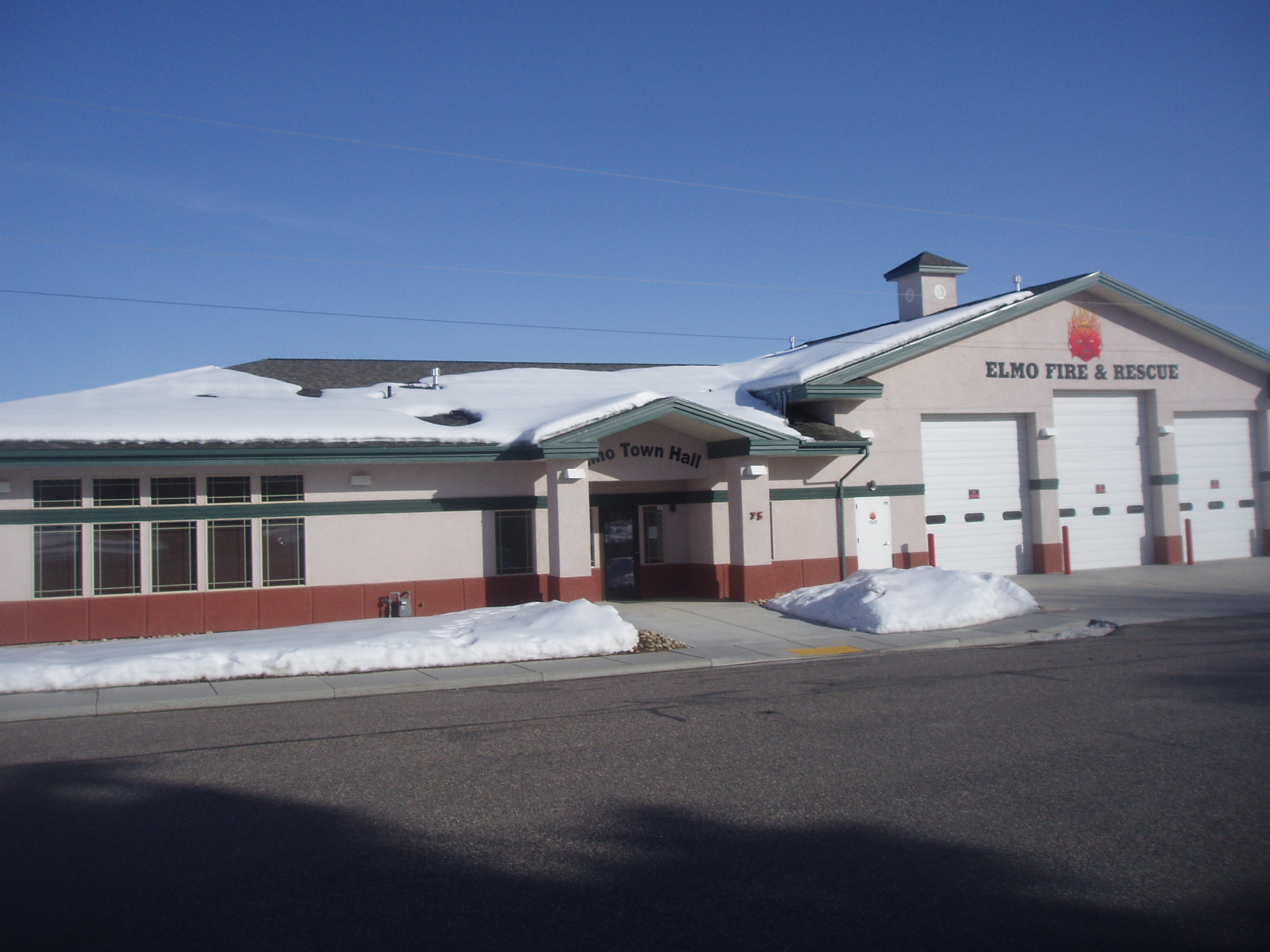
Road Department. The Emery County Road Department maintains the county road system — a network of paved county roads, gravel rural routes, and maintained dirt tracks that connect outlying communities and ranching operations to the main highway corridors. Road Supervisor Justin Truman and General Foreman Ty Gordon lead a crew responsible for patching asphalt, grading gravel roads, clearing snowfall from mountain routes, and managing drainage on a landscape prone to flash flooding and erosion. In a county where the nearest interstate (I-70) bisects the midsection and state highways serve the population centers, county roads fill the critical last-mile connectivity gap for ranchers, miners, and rural residents.
Recreation. The county established a recreation program in 1954 and added television transmission in 1956 — the latter reflecting the particular challenge of delivering media services to isolated communities in the television age, before cable and satellite infrastructure reached rural Utah. Today, county recreation encompasses parks, sports programs, and coordination with BLM and state resources for outdoor recreation amenity management.
Health and Sanitation. Emery County created sanitary districts beginning in 1888, and by 1898 district health officers were working in conjunction with the commission as a board of health. Modern public health services are now delivered largely through the San Juan, Emery, and Grand (SEG) health department or state partnerships, though the county commission retains authority over local health boards and sanitation districts.
Special Service Districts. Utah law allows county commissions to create special service districts for specific functions — irrigation, fire protection, recreation, water. Emery County’s commission has exercised this authority repeatedly across its history. The Green River Irrigation District was created in 1910, one year after the state legislature empowered counties to establish such districts upon petition (see Ch19: Water for the Desert ↗ 3 Ch19: Water for the Desert Water, the defining constraint of Emery County life: pioneer ditches and the 1890s salinization crisis, the federal Emer... Read chapter → ). [needs additional sources: full list of active special service districts]
23.7 Federal Lands and the Public Lands Relationship
No aspect of Emery County governance is more consequential, more contested, or more defining of the county’s political identity than its relationship with the federal government as a landowner. Most of Emery County’s 4,462 square miles belongs not to the county, nor to the state, but to the United States — managed by the Bureau of Land Management (BLM), the Forest Service, the National Park Service, or other federal agencies.
The federal land presence is both an asset and a constraint. It protects landscapes of extraordinary beauty and scientific significance — the San Rafael Swell, the Book Cliffs, Goblin Valley (see Ch30: Landscapes of Adventure ↗ 5 Ch30: Landscapes of Adventure A practical field guide to Emery County's adventure landscape: San Rafael Swell slot canyons and OHV routes, Goblin Vall... Read chapter → ) — and it supplies recreational visitors who inject dollars into the local economy. But federal land is exempt from county property taxes. It cannot be subdivided or sold to private buyers who might invest in it. Its management is determined not by county commissioners in Castle Dale but by federal administrators in Washington and Salt Lake City, often applying national priorities that diverge from local interests.
Emery County maintains a dedicated Public Lands Office within its administrative structure — an acknowledgment of how central federal land issues are to county governance. The county serves as a cooperating agency in BLM land-use planning processes, giving it formal standing to comment on and influence Resource Management Plans. The county’s stated position consistently favors multiple-use management that preserves access to natural resources — coal, natural gas, uranium, gypsum, grazing — alongside recreation and conservation.
The county has also been a participant in Utah’s broader public lands transfer movement, which advocates for shifting management of federal public lands to state or county control. Resolutions supporting state primacy over land management have appeared on Emery County Commission agendas, reflecting the community’s frustration with federal decisions that constrain resource development. [needs additional sources: specific commission resolutions on public lands transfer]
The relationship with the BLM has nonetheless been pragmatically cooperative in many instances. The BLM has conveyed parcels of federal land to the county to enable a new Sheriff’s Office substation and the Buckhorn Information Center — serving visitor access to the San Rafael Swell. The agency also conveyed 6,300 acres to expand Goblin Valley State Park, with County Commission Chair Lynn Sitterud publicly acknowledging the BLM’s “professional working relationship” with county officials.
23.8 The Dingell Act: Public Lands Negotiation (2019)
The most significant public lands legislation affecting Emery County in a generation was signed into law on March 12, 2019, as part of the John D. Dingell, Jr. Conservation, Management, and Recreation Act. Embedded within this broader federal lands package was the Emery County Public Land Management Act, the product of years of negotiation among county officials, conservation groups, off-road vehicle users, ranching interests, and congressional representatives.
The legislation’s central accomplishment was designating 663,000 acres of public land as congressionally protected wilderness — the largest wilderness designation in the American West in more than a decade. Fourteen wilderness areas were established or expanded in and around the San Rafael Swell, including Muddy Creek (208,000 acres), Mexican Mountain, San Rafael Reef, Red’s Canyon, and others.
Simultaneously, the act designated the San Rafael Swell Recreation Area — nearly 217,000 acres of BLM-managed land that is withdrawn from new mining claims and mineral leasing and closed to the construction of new off-road vehicle routes and trails. The Recreation Area designation preserved existing OHV uses while preventing further expansion — a compromise that satisfied neither full-protection advocates nor those who had opposed any limitations.
As mandated by the legislation, a land exchange was negotiated between the BLM and the Utah Trust Lands Administration (TLA). Under the exchange: approximately 116,000 acres of state trust lands located within the newly designated areas were transferred to BLM control (over 109,000 of those acres in Emery County alone); in return, the Trust Lands Administration acquired approximately 98,500 acres of federal land outside the special management areas, lands that could generate revenue for Utah’s public school trust fund.

Table 23-B — Dingell Act Provisions & Acreage (2019)
| Provision | Acreage | Note |
|---|---|---|
| Wilderness designated (total) | 663,000 | Across Emery, Carbon, Sanpete & Sevier; largest Western designation in >a decade; Emery share dominant |
| — Muddy Creek unit (largest) | 208,000 | One of 14 new Emery-area units |
| San Rafael Swell Recreation Area | ~217,000 | Withdrawn from new mineral leasing; no new OHV routes; existing OHV use preserved |
| State trust land to BLM (exchange) | 116,000 | >109,000 ac of it in Emery County |
| Federal land to Utah Trust Lands (exchange) | 98,500 | Revenue land for the public-school trust fund |
Source: BLM Dingell Act (Utah) and BLM-Trust Lands exchange decision; SUWA Emery County summary.
The Dingell Act represented a pragmatic resolution of longstanding tensions — providing wilderness protection sought by environmental groups while honoring commitments to OHV recreation, grazing, and county-level concerns about economic access. County government’s role in the multi-year negotiation was significant: commissioners and the Public Lands Office participated directly in working groups, asserting the county’s interests regarding resource access, road maintenance, and economic continuity.
23.9 Fiscal Structure: Revenue, Coal Dependence, and the Budget Crisis
Emery County’s fiscal structure is the product of its economic geography. For most of the 20th century, the county’s property tax base was anchored by coal — the mines themselves, the processing infrastructure, and eventually the massive generating plants of Hunter (near Castle Dale) and Huntington (near Huntington City), built by Utah Power & Light beginning in the 1970s. Property taxes on these industrial facilities, combined with coal royalties and severance tax distributions from the state, provided Emery County with a revenue base well above what its modest population alone would generate.
When the coal industry began its long decline after 2012 — driven by cheap natural gas, federal environmental policy shifts, and declining electricity demand — the fiscal consequences for Emery County were severe (see Ch21: Energy Transition ↗ 3 Ch21: Energy Transition From coal peak to post-carbon crossroads: mine closures, shifting retirement timelines for Hunter and Huntington power p... Read chapter → ). Assessed property valuations fell as mine closures and plant deratings reduced the taxable value of coal infrastructure. Royalty distributions shrank. The county faced the dilemma confronting resource-dependent rural governments everywhere: how to sustain public services when the industry that paid for them is contracting.
Federal revenue supplements — particularly PILT (Payment in Lieu of Taxes) — partially offset these losses. The federal PILT program makes annual payments to counties containing nontaxable federal lands, compensating them for the property taxes they cannot collect on BLM, Forest Service, and other federal parcels. In January 2026, Emery County received a $2,610.72 PILT payment from the Utah Division of Wildlife Resources for over 6,000 acres of wildlife habitat areas within the county. PILT payments from the Department of Interior’s broader program provide more substantial support — the formula accounting for population, federal land acreage, and prior revenue-sharing payments.
Additional federal revenue has flowed through the Secure Rural Schools program and mineral royalty sharing, though these sources have fluctuated with congressional reauthorizations and commodity prices. The county has managed its fiscal stress through a combination of austerity measures, deferral of capital projects, and pursuit of economic development alternatives — including renewable energy projects and tourism infrastructure.
The Seven County Infrastructure Coalition, formed in 2014, represents Emery County’s most structured regional approach to fiscal advocacy. The coalition — comprising Carbon, Daggett, Duchesne, Uintah, San Juan, Sevier, and Emery counties — seats one commissioner from each member county on its board. It advocates at the state and federal levels for infrastructure investment in energy-producing rural counties, arguing that communities whose landscapes have powered Utah’s economy deserve sustained support during the energy transition. [needs additional sources: specific Emery County budget figures, coal-era vs. post-coal revenue comparison]
23.10 Political Culture and Voting Patterns
Emery County is among the most reliably conservative political units in the state of Utah — itself one of the most Republican states in the nation. The county’s voting record in presidential elections has been consistently Republican across modern political history; by the 2012–2020 election cycle, Ballotpedia classified Emery County as “Solid Republican,” a category it shares with the large majority of rural Utah counties.
The county sees competitive elections — defined as races decided by fewer than five percentage points — only about 2% of the time. Most contested races are decided within the Republican primary rather than in the general election, where Democratic candidates rarely field strong opponents. This pattern reflects not only ideological alignment but demographic homogeneity: Emery County is overwhelmingly white, predominantly Latter-day Saint, and deeply rooted in working-class occupational cultures centered on mining, agriculture, and trades (see Ch22: Demography & Social Change ↗ 3 Ch22: Demography & Social Change From pioneer founding cohort to post-coal crossroads: population boom and bust, LDS social architecture, an aging and sh... Read chapter → ).
The county’s political culture is shaped by several reinforcing values. Self-reliance and distrust of outside authority — particularly federal authority — run deep in a community whose land and livelihoods have repeatedly been subject to decisions made in Washington without adequate local input. The collapse of coal employment and the Dingell Act’s wilderness designations are recent additions to a long list of grievances. Community solidarity — reinforced by LDS ward networks, multigenerational family ties, and shared experience of economic hardship — creates strong social cohesion and skepticism toward cosmopolitan political movements. Pragmatic conservatism rather than ideological rigidity tends to characterize county governance; commissioners have cooperated with federal agencies when cooperation produced tangible local benefits, even while publicly supporting the transfer-of-public-lands movement.
Utah has not voted for a Democratic presidential candidate since 1964, and Emery County has tracked that pattern faithfully. The county’s median age of 38.6 years — slightly older than the national median — contributes to conservative voting patterns; research consistently shows that older Americans, and particularly those from the Silent Generation (born 1928–1945) and Baby Boom (born 1946–1964), vote more reliably Republican than younger cohorts.
23.11 Regional Cooperation: The Seven County Infrastructure Coalition
Emery County does not govern in isolation. The economic and political challenges of resource-dependent rural counties — coal bust, federal land conflicts, inadequate infrastructure investment, declining state revenue sharing — are shared across eastern Utah’s canyon country. The formation of the Seven County Infrastructure Coalition (SCIC) in 2014 formalized a regional partnership that pools the advocacy capacity of seven counties: Carbon, Daggett, Duchesne, Emery, San Juan, Sevier, and Uintah.
Each county seats one commissioner on the Coalition’s board, giving the body direct democratic legitimacy and ensuring that decisions reflect elected leadership rather than hired staff alone. The SCIC advocates before the Utah Legislature and the U.S. Congress for infrastructure funding — roads, broadband, energy transmission, water projects — suited to the specific conditions of energy-producing rural counties.
Table 23-C — Seven County Infrastructure Coalition (2014)
| Member county | Seat |
|---|---|
| Carbon | 1 commissioner |
| Daggett | 1 commissioner |
| Duchesne | 1 commissioner |
| Emery | 1 commissioner |
| San Juan | 1 commissioner |
| Sevier | 1 commissioner |
| Uintah | 1 commissioner |
Source: scic-utah.org.
The SCIC also represents a political calculation: individually, these small counties have limited leverage. Collectively, they represent a significant swath of Utah’s geography and a substantial portion of its energy production heritage. The coalition’s formation coincided with the beginning of the coal industry’s accelerating decline, reflecting a recognition that regional cooperation would be essential to managing a difficult economic transition.
23.12 Governance in the 21st Century: Challenges and Adaptation
Emery County enters the late 2020s facing a governance challenge with few historical precedents: how to sustain a functioning county government as the economic engine that built it — coal — continues its structural decline.
The county’s property tax base has shrunk significantly with mine closures and the derating of generating units at Hunter and Huntington power plants. State revenue-sharing formulas tied to mineral production have returned less. Population has drifted downward, reducing federal PILT allocations calculated partly on per-capita formulas. The school enrollment cliff documented in Chapter 22 means that the relationship between the county and local school districts — which depend heavily on county tax distributions — is under sustained stress.
Adaptation strategies pursued by county government have included aggressive pursuit of federal economic development funding (through the Appalachian Power Act–analog programs for energy-transition communities), participation in the San Rafael Swell Recreation Area’s tourism-development potential, support for the Green River Energy Center feasibility work, and engagement with solar development on county-controlled lands and adjacent BLM parcels. The county has also worked to position itself as a favorable environment for renewable energy infrastructure — recognizing that the transmission corridors and worker expertise built for coal may have second lives in a clean-energy economy.
The fundamental tension of Emery County governance — local authority over a landscape controlled by others — will not be resolved in any single legislative session or land deal. What distinguishes Emery County’s institutional response to this tension is a combination of tenacious advocacy for local interests, pragmatic cooperation when federal partnerships produce tangible benefits, and a bedrock commitment to maintaining the public services — roads, justice, emergency response, schools — that make rural life viable in one of the most remote corners of the American West.
Sources
- Utah Division of Archives and Records Service — Emery County Agency History, https://archives.utah.gov/research/entities/1513/
- Wikipedia — Emery County, Utah, https://en.wikipedia.org/wiki/Emery_County,_Utah
- UEN Utah History Encyclopedia — Emery County, https://www.uen.org/utah_history_encyclopedia/e/EMERY_COUNTY.shtml
- UEN Utah History Encyclopedia — Carbon County, https://www.uen.org/utah_history_encyclopedia/c/CARBON_COUNTY.shtml
- I Love History — Emery County, Utah.gov, https://ilovehistory.utah.gov/emery-county/
- Emery County official website — Department Directory, https://emery.utah.gov/home/department-directory/
- Emery County Commission page, https://emery.utah.gov/home/offices/commission/
- Emery County Sheriff’s Office, https://emery.utah.gov/home/offices/sheriff/
- Emery County Attorney’s Office, https://emery.utah.gov/home/offices/attorney/
- Emery County Road Department, https://emery.utah.gov/home/department-directory/road/
- Emery County Public Lands Office, https://emery.utah.gov/home/department-directory/public-lands/
- Emery County Clerk/Auditor — Budget, https://emery.utah.gov/home/offices/clerk-auditor/emery-county-budget/
- Ballotpedia — Emery County, Utah, https://ballotpedia.org/Emery_County,_Utah
- Bureau of Land Management — Conveys Emery County Parcels, https://www.blm.gov/press-release/bureau-land-management-conveys-emery-county-parcels-improve-recreational-access-and
- Bureau of Land Management — Dingell Act, Utah, https://www.blm.gov/about/laws-and-regulations/dingell-act/utah
- BLM — Land Exchange with Utah Trust Lands Administration, https://www.blm.gov/announcement/blm-issues-decision-land-exchange-utah-trust-lands-administration
- SUWA — Emery County Public Land Management Act, https://suwa.org/emery_county/
- ETV News — Dingell Act Effects Outlined, https://etvnews.com/the-dingell-act-effects-outlined/
- ETV News — Emery County Receives PILT Payment from DWR, https://etvnews.com/articles/featured/emery-county-receives-pilt-payment-from-dwr-2/
- U.S. Department of the Interior — PILT Program, https://www.doi.gov/pilt
- Seven County Infrastructure Coalition, https://scic-utah.org/
- Salt Lake Tribune — Emery County Land Bill Deal, https://www.sltrib.com/news/2024/11/15/emery-county-land-bill-deal-sees/
- Wikipedia — Crandall Canyon Mine, https://en.wikipedia.org/wiki/Crandall_Canyon_Mine
- Headwaters Economics — Coal Extraction Revenue and Spending: A Comparison Among Western States, https://headwaterseconomics.org/wp-content/uploads/Coal_Fiscal_Policies_Among_States.pdf
See Also
- Ch16: Mormon Colonization ↗ 3 Ch16: Mormon Colonization LDS settlement of Emery County: the call to colonize Castle Valley, founding of pioneer towns, cooperative irrigation, a... Read chapter →
- Ch17: Coal, Copper & Uranium ↗ 3 Ch17: Coal, Copper & Uranium The extractive century: coal seams of the Wasatch Plateau, uranium-rich sandstones of the San Rafael Swell, copper bypro... Read chapter →
- Ch19: Water for the Desert ↗ 3 Ch19: Water for the Desert Water, the defining constraint of Emery County life: pioneer ditches and the 1890s salinization crisis, the federal Emer... Read chapter →
- Ch21: Energy Transition ↗ 3 Ch21: Energy Transition From coal peak to post-carbon crossroads: mine closures, shifting retirement timelines for Hunter and Huntington power p... Read chapter →
- Ch22: Demography & Social Change ↗ 3 Ch22: Demography & Social Change From pioneer founding cohort to post-coal crossroads: population boom and bust, LDS social architecture, an aging and sh... Read chapter →
- Ch30: Landscapes of Adventure ↗ 5 Ch30: Landscapes of Adventure A practical field guide to Emery County's adventure landscape: San Rafael Swell slot canyons and OHV routes, Goblin Vall... Read chapter →
Further Reading
- Utah Division of Archives — Emery County Agency History (Entity 1513)
- Bureau of Land Management — Dingell Act, Utah
- SUWA — Emery County Public Land Management Act
- U.S. Department of the Interior — PILT Program
- Seven County Infrastructure Coalition
Proposed Maps and Figures
- Map: Emery County’s evolving boundaries (1880 original, 1890 after Grand County split, 1894 after Carbon County split, present)
- Map: Federal land ownership within Emery County — BLM, USFS, NPS, state parcels
- Map: Dingell Act designations — wilderness areas, San Rafael Swell Recreation Area, land exchange parcels
- Photo: Emery County Courthouse and County Administration Building, Castle Dale
- Org chart: Emery County government structure — commission, elected offices, departments
- Timeline: Key milestones in county governance history (1880–2026)
- Chart: County revenue composition over time — coal era vs. transition period
Proposed Tables
- Table: Current Emery County elected offices — office, current holder, function
- Table: Dingell Act wilderness areas — name, acreage, key features
- Table: Seven County Infrastructure Coalition — member counties, commissioners seated